
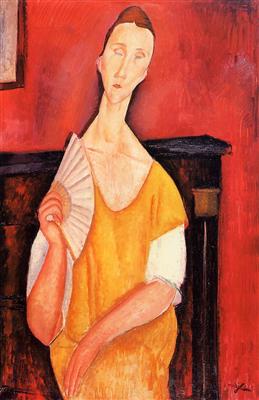
What motivates an art forger?
Elmyr de Hory

Some artists paint fakes for money, others for revenge. Elmyr de Hory, one of the greatest forgers of all time, was of the latter camp. Born in Hungary in 1906 to a middle-class family, de Hory started misleading the world at a young age by claiming that he was an aristocrat, born from ambassadors and bankers. He began art school in his late teens in Germany and in 1926, de Hory moved to Paris.
Early on in his career, de Hory was snubbed by art experts who claimed that his figurative art was uninteresting and out of touch with the times. Cubism, Expressionism and Fauvism were en vogue in the late 1920’s and de Hory failed to capture an audience for his work. But while his own art would not earn him any money, he would soon discover that his fakes definitely could. In 1946, struggling to make ends meet, he sold a sketch to someone who “mistook it” for an authentic Picasso and thus his life was forever changed. For the next few decades, de Hory made his living painting copies of Matisse, Renoir, and most especially, Modigliani.
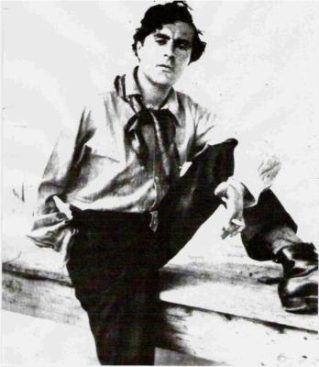
Amedeo Modigliani
Born in Italy in 1884, Amedeo Modigliani moved to Paris in 1906 where he became a vagabond artist keeping company with poets and other artists and securing a reputation as a “ladies man.” His figurative paintings are known for their elongated faces, necks, and bodies. Many of his subjects are painted having only simple blank eyes, yet somehow manage to convey raw, deep emotion.
I personally love his work.
As happens with so many artists, especially those struggling to make a living, Modigliani, like de Hory, became addicted to drugs and alcohol. Modigliani died of tubercular meningitis when he was only 35 years old. De Hory lived to be 70 and died in 1976 by suicide.
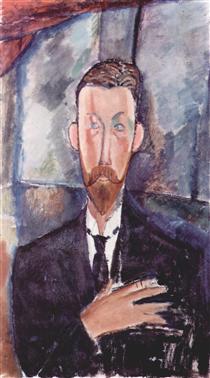
Is it Modigliani or a de Hory?
For decades, Elmyr de Hory’s fakes made their way into private collections, galleries and museums. His copies of Modigliani’s paintings are so convincing that many are still displayed around the world today, fooling viewers and experts alike. And, like many prolific art forgers, de Hory’s fakes have their own collectors.
Owning one of Elmyr de Hory’s fakes will cost you a pretty penny.
Is it worth it?
What do you think?
To learn more about Elmyr De Hory, I recommend:
Fake! The Story of Elmyr De Hory, the Greatest Art Forger of Our Time by Irving Clifford

0 Comments